
It’s beginner-friendly, budget-friendly, and easy to make in a small spray bottle. I’d make it fresh in small batches and label it clearly with the date made and a use-by date, especially if it’s going into the camping box or outdoor entertaining cupboard.
Get more details about this project
What you need
4 oz / 120 ml water
5 drops eucalyptus essential oil
3 drops lemongrass essential oil
3 drops citronella essential oil
Small spray bottle
Small funnel, optional
Label, optional
Instructions
Ingredient Notes
Eucalyptus essential oil has a fresh, clean scent and is often used in homemade outdoor sprays.
Lemongrass essential oil has a bright citrus-herbal smell that pairs beautifully with citronella.
Citronella essential oil is one of the most familiar natural scents used in outdoor candles, sprays, and patio products. The National Pesticide Information Center notes that oil of citronella has long been used in repellent products and is currently listed by the U.S. EPA as a minimum-risk pesticide.
Water keeps this recipe simple, but because oil and water naturally separate, you will need to shake the bottle well before every use.
Instructions
Pour the water into a clean 4 oz / 120 ml spray bottle.
Add the eucalyptus, lemongrass, and citronella essential oils.
Screw the spray top on tightly.
Shake the bottle well to disperse the essential oils through the water.
Spray lightly into the air around outdoor sitting areas, patios, porches, picnic tables, or camping spaces.
Shake again before each use, as the essential oils will naturally separate from the water.
How To Use This Homemade Bug Spray
Use this DIY natural insect repellent spray as an air and area spray. Lightly mist around the space where you are sitting outdoors, especially around patio furniture, picnic tables, garden seating, and camping areas.
Do not spray it directly onto food, drinks, eyes, open cuts, irritated skin, pets, or children’s hands. If you want a product to apply directly to skin for mosquito protection, choose a repellent that is labelled for skin use and follow the directions carefully.
Can This Be Sprayed On Skin?
I would keep this version as an air and outdoor-area spray rather than a body spray. Essential oils can irritate skin if they are not diluted properly, and water alone does not safely dilute essential oils for skin use.
For skin-applied insect repellents, especially for children, travel, camping, or areas with mosquito-borne illness risk, use a properly labelled, skin-safe repellent. The CDC advises following label instructions, avoiding children’s hands, eyes, mouth, cuts, and irritated skin, and applying repellent to an adult’s hands first before using it on a child’s face.
Is This Safe For Babies, Kids, And Pets?
This spray should not be used directly on babies, young children, or pets. Use it as a light area spray only, and keep the bottle out of reach.
For babies and children, physical barriers such as clothing, mosquito netting, and keeping bugs away from play areas are often the gentlest starting point. The CDC also advises not using oil of lemon eucalyptus or PMD products on children under 3 years old, which is a useful reminder that “natural” still needs careful handling.
Pets can also be sensitive to essential oils, especially cats and small animals, so avoid spraying this near pet bedding, bowls, litter areas, or directly around their faces.
Does Natural Insect Repellent Really Work?
Natural essential oil sprays can help make an area less appealing to insects for a short time, but they usually need to be reapplied more often than commercial repellents. They are best used as part of a wider bug-control routine: remove standing water, keep food covered, use screens where possible, wear protective clothing, and choose a registered skin repellent when you need reliable bite protection.
The CDC recommends EPA-registered repellents for preventing mosquito bites, and the EPA explains that registered skin-applied repellents are reviewed for human safety and effectiveness when used as directed.
Optional Variations
Citronella Patio Spray
Use the original blend with eucalyptus, lemongrass, and citronella for a bright outdoor scent.
Peppermint Garden Spray
Add 1–2 drops of peppermint essential oil for a sharper, fresher scent. Keep this away from pets and do not spray near your eyes or face.
Lavender Evening Spray
Add 2 drops of lavender essential oil for a softer evening patio spray. This is a nice option for outdoor tables when you want something a little less sharp than citronella.
Camping Table Spray
Make the recipe in a small travel spray bottle and keep it with your camping kitchen supplies. Use it around the table area before serving food, but never spray directly onto plates, cookware, food, or drinks.
Storage Tips
Because this is a water-based homemade spray without a preservative, make small batches and use within 1–2 weeks. Store the bottle in a cool, dark place, away from direct sunlight and heat.
If the spray changes smell, becomes cloudy in an unusual way, or the bottle looks dirty, tip it out and make a fresh batch. It only takes a few minutes, so there is no need to keep an old bottle hanging around like a mystery potion at the back of the cupboard.
Safety Notes
Do not spray into eyes or onto the face.
Do not spray directly onto food, drinks, plates, or food preparation surfaces.
Do not use directly on babies, young children, pets, or irritated skin.
Keep essential oils and finished sprays out of reach of children.
Shake well before each use.
Use a labelled bottle so nobody mistakes it for a cleaning spray, body mist, or room fragrance.
If you need strong mosquito or tick protection, use a registered insect repellent designed for skin application.
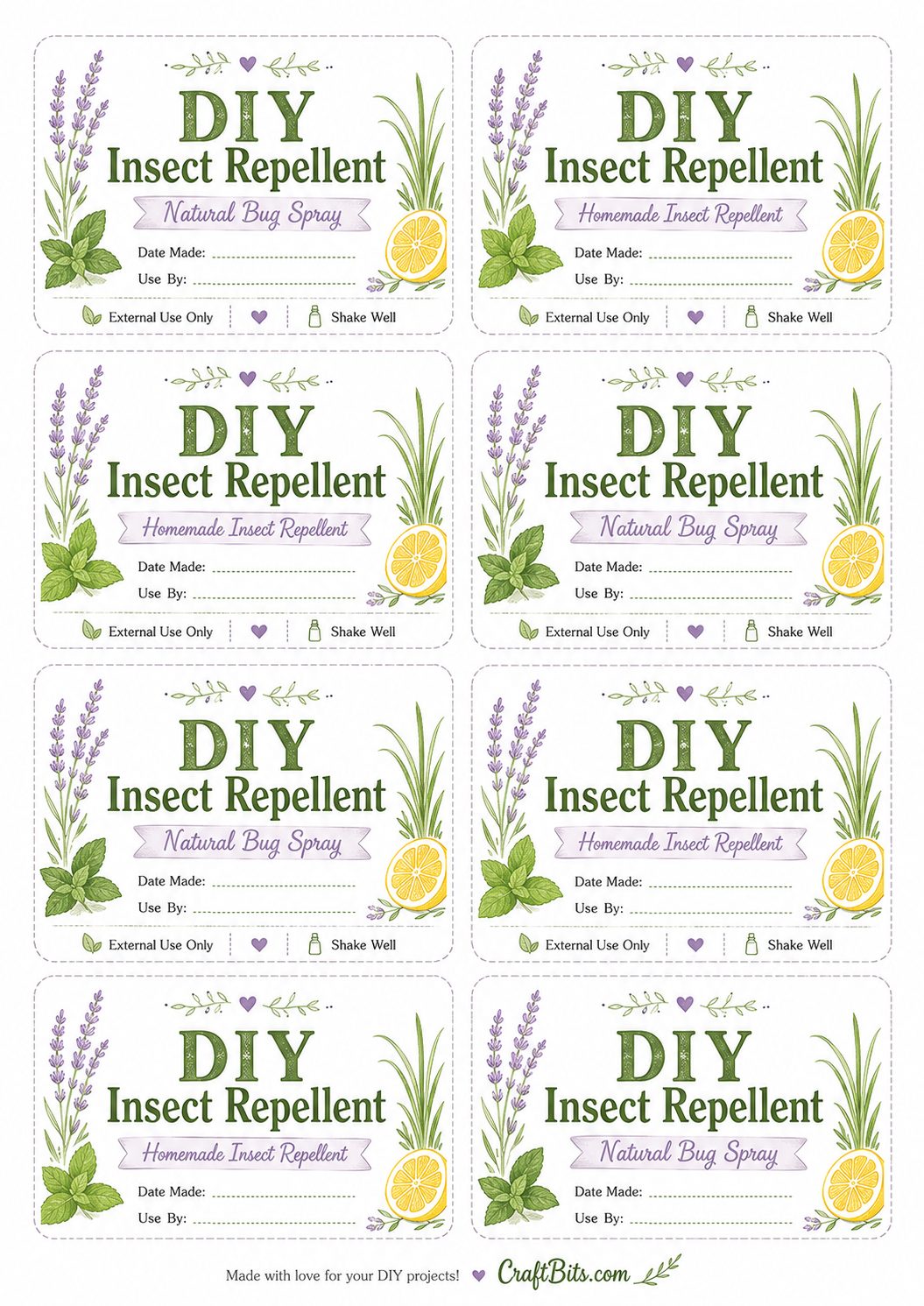
Printable Label Text
DIY Natural Insect Repellent Spray
Eucalyptus, Lemongrass & Citronella
For air and outdoor-area use only
Shake well before use
Do not spray on food, eyes, pets, or children
Date Made: ________
Use By: ________
CraftBits.com
FAQ
Can I use this insect repellent spray indoors?
Yes, you can lightly mist it near open windows, doorways, or screened areas, but use it sparingly and avoid spraying near pets, children, bedding, food, or polished surfaces.
Can I use tap water?
Yes, but distilled or boiled-and-cooled water is better if you want the spray to stay fresher for a little longer.
Can I add alcohol or witch hazel?
You can replace part of the water with witch hazel or high-proof alcohol to help the essential oils disperse a little better, but this changes the recipe and may make it more drying or irritating. Keep it as an area spray, not a skin spray.
Can I make a bigger batch?
Yes, but smaller batches are better because this is a homemade water-based spray. Double the recipe only if you know you will use it quickly.
Does this kill insects?
No. This recipe is intended to help repel insects from an area, not kill them. That is already one of the strengths of the original CraftBits recipe and should stay in the article.
Can I use fragrance oil instead of essential oil?
For this particular project, essential oils are the better choice. Fragrance oils may smell lovely, but they are not the same thing as essential oils and may not have the same insect-repelling qualities.




finaly, an insect repellent without any harmful ingredients
take care when using citronella as it can be harmful – it has been banned from most uk products.
for a repellant that will smell nasty to flies but lovely to humans and will be kind to the skin try adding small amoof teatree, mint and avacado oils
Can we spray it on our skin also? Is it soft enough for kids/baby
Smells and works great!
cooly
i tried this, i’m not sure if it worked but it made the air smell tasty 🙂
I live in South Africa and mix lemongrass oil, citronella oil and tea tree oil into my body lotions as well. Works extremely well. Not toxic. Citronella oil is the basis for all insect repellant products.
does this really work as i go camping lots, and nearly everything that i have tried only attracts them.
This is certainly not toxic
stupid and toxic